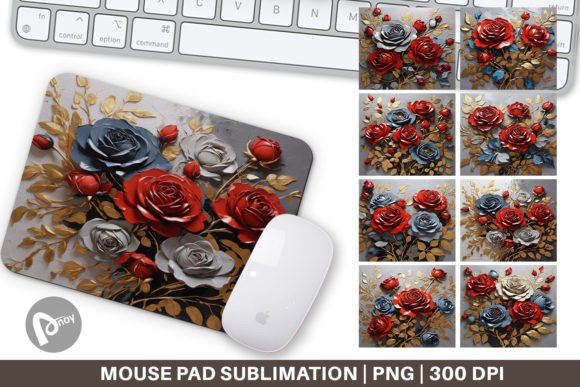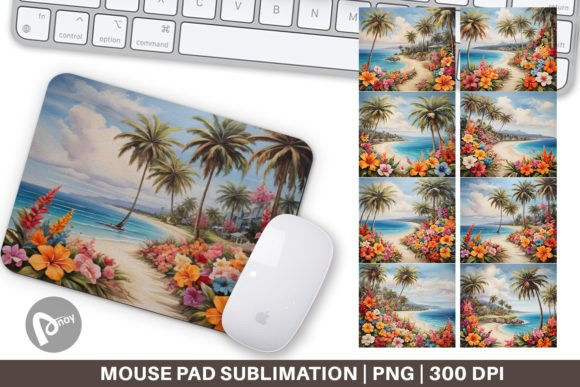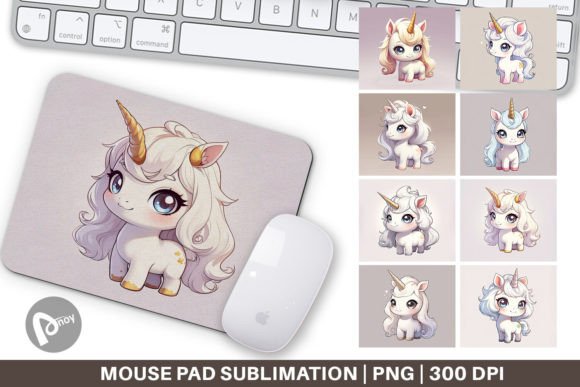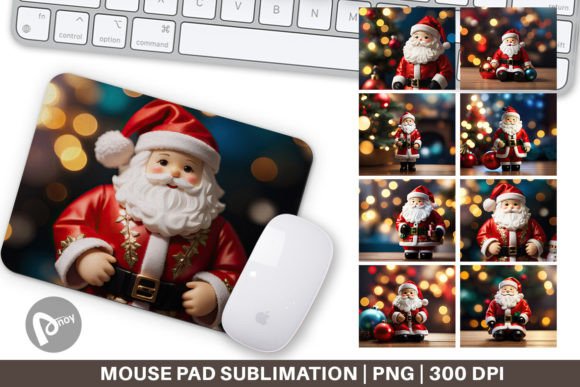
Mastering Workspace Energy with a Mouse Pad 3D Paint Splashes Design
The objects we place within arm's reach shape our mental state more than most of us realize. A desktop accessory might seem trivial when stacked against quarterly goals or creative deadlines, but small environmental signals compound over hours of sustained focus. The Mouse Pad 3D Paint Splashes enters this conversation not as decoration, but as a deliberate choice about the visual and tactile conditions under which you produce your best work. For entrepreneurs, designers, developers, and decision-makers who log long sessions in front of a screen, the surface beneath your mouse is one of the few constants in a variable-heavy workday.
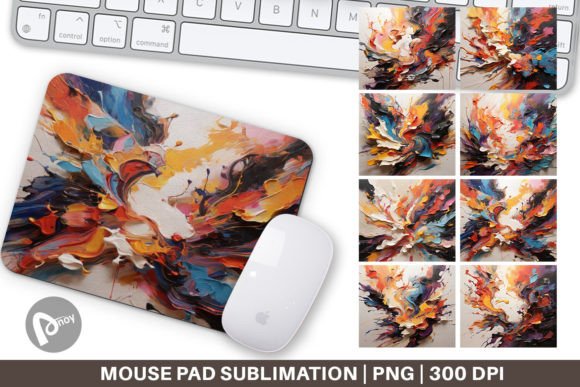
What separates a sublimation mouse pad featuring high-resolution paint splash artwork from a generic pad is the intersection of functional ergonomics and visual anchoring. The sublimation process fuses dye directly into the fabric or polymer substrate, creating an image that resists peeling, fading, and edge wear far longer than surface-printed alternatives. This matters strategically because workspaces that endure heavy daily use demand materials that maintain their integrity without requiring frequent replacement. The 9.5 by 8.1 inch dimensions strike a balance between generous tracking surface for precise cursor movements and a footprint that respects desk real estate—a practical consideration for professionals managing multiple monitors, notebooks, drawing tablets, or reference documents within a confined area.
Why Your Workspace Background Communicates More Than You Think
Visual psychology research consistently points to the influence of color, texture, and organized complexity on cognitive performance. A mouse pad with dynamic paint splashes introduces controlled unpredictability into an otherwise rigid digital workspace. The organic flow of splattered pigment patterns provides the eye with micro-moments of visual relief between tasks—a subtle but meaningful buffer against the flat uniformity of spreadsheets, code editors, timelines, and dashboards. When you glance down to reposition your hand, you encounter an abstract composition rather than a blank void or company-branded monotony.
For creative professionals specifically, the sublimation mouse pad becomes a low-commitment canvas that signals to your brain that this is a space where unconventional thinking is permitted. Marketers drafting campaign concepts, product designers iterating on user flows, and independent creators managing multiple brand identities all benefit from environmental cues that break linear patterns. The 3D paint splash effect, rendered at 300 dpi clarity, introduces depth perception cues that flat illustrations cannot replicate. This depth dimension matters because it creates a subtle sense of expansiveness on a surface that is otherwise entirely two-dimensional.
Strategic Placement and Intentional Desktop Design
Thoughtful workspace curation is not about accumulating aesthetically pleasing objects. It is about placing tools and signals that reinforce specific work modes. A Mouse Pad 3D Paint Splashes can serve as a deliberate boundary marker between zones on a larger desk—separating the creative workspace from the administrative station, or the deep-focus writing area from the collaborative video call setup. The visual weight of a richly saturated sublimation print draws the eye just enough to define territory without becoming a distraction.
Before committing to any desktop accessory, consider mapping your typical workflow across physical space. Where does your mouse hand spend most of its time? What is the dominant color temperature of your room lighting during peak productivity hours? How does the pad's color palette interact with the rest of your equipment? These questions prevent purchases driven purely by impulse and steer you toward accessories that perform under real conditions. The right mouse pad answers yes to three checks: it supports proper wrist alignment, resists degradation from daily use, and contributes positively to the visual atmosphere without demanding attention that belongs on the task.
Sublimation Quality as a Long-Term Decision Factor
Not all printed mouse pads are manufactured equally. Sublimation differs fundamentally from screen printing or adhesive decal application. In sublimation, heat and pressure transform solid dye particles directly into gas, which penetrates the material's surface and bonds at a molecular level. The result is a design that will not scratch off, crack along fold lines, or develop that cloudy patina that plagues cheaper pads after months of palm contact. For professionals who view their workspace as an investment rather than an expense, this durability translates into consistent visual quality across years of heavy use.
The 300 dpi resolution specified for these files means the paint splash patterns retain crisp edge definition and accurate color gradients at the printed size. Lower resolution files produce softening, banding, or pixelation artifacts that undermine the immersive quality of the design. When you are receiving 8 PNG files at print-ready specifications, you gain the flexibility to select the palette that best aligns with your current setup or seasonal rotation—a small but meaningful degree of control over your immediate environment.
Creative Energy, Focus, and the Role of Abstract Visuals
There is a practical reason that abstract art—specifically gestural, splatter, and fluid forms—finds its way into modern offices and home studios. Representational imagery carries narrative weight and can inadvertently pull cognitive resources toward interpretation. An abstract paint splash pattern, by contrast, engages the visual cortex without hijacking narrative processing. You experience color relationships, movement, and texture without the brain defaulting to "What is this a picture of?" mode.
This makes a sublimation mouse pad with 3D paint splashes particularly well-suited to knowledge workers who toggle rapidly between creative ideation and analytical execution. Writers, strategists, financial analysts, educators, and developers all report that moments of productive reflection often occur during micro-pauses—those brief seconds when the eyes drift from the screen to the periphery. Giving your peripheral vision something interesting but not demanding to land on keeps the subconscious associative network active without derailing train of thought.
Branding, Client Perception, and Professional Presentation
For small business owners, consultants, and freelancers who occasionally host clients or collaborators in their workspace, every surface contributes to the impression of competence and taste. A worn, curling mouse pad with a faded logo from a decade-old conference imposes an unintended narrative about attention to detail. A clean, vibrant sublimation mouse pad with an original art print suggests someone who considers their environment holistically. This is never the deciding factor in a business relationship, but it contributes to the aggregate signal that builds or erodes trust before a single word is spoken.
If you use your workspace for video calls or recorded content, consider that your mouse pad occasionally enters the frame when demonstrating workflows, sharing screen recordings with webcam overlay, or during casual check-ins where your desktop is partially visible. The paint splash design provides visual texture in those moments without the distraction of readable text or recognizable branding that could conflict with the message you intend to send.
Planning Your Desktop Refresh Around Work Rhythms
Introducing a new visual element to a workspace that has grown stale can produce a measurable shift in energy and focus. This is not mysticism—it is the psychological effect of novelty on dopamine circuits that regulate motivation and task initiation. Many productive people maintain a rotation of desktop visuals, updating their mouse pad, wallpaper, or desk mat seasonally or quarterly as a low-cost method of refreshing the cognitive association with their work environment.
With 8 distinct PNG files provided, the sublimation mouse pad approach supports this rotation logic directly. You might align color palettes with seasonal light changes—warmer tones during darker winter months, cooler or brighter compositions in summer when natural light floods the room. Or you might switch designs to signal phase transitions in major projects, creating a visual ritual that marks the close of one initiative and the beginning of another. Rituals around workspace configuration, however small, help knowledge workers maintain psychological separation between phases of work when physical separation is not possible.
Avoiding the Trap of Desktop Clutter Disguised as Inspiration
Intentionality falters when we accumulate too many "useful" or "beautiful" objects without assessing their collective effect. A Mouse Pad 3D Paint Splashes risks becoming part of the problem if it joins a desk already crowded with items competing for visual attention. The strategic approach is to evaluate what you are willing to remove or relocate before adding something new. The mouse pad should anchor the primary interaction zone—your mouse hand's territory—and every other item should justify its proximity to that zone.
Consider a simple exercise: photograph your desk at the start and end of each day for one week. Review the images not for tidiness but for visual weight distribution. Where does the eye travel? What objects pull focus away from the screen? The sublimation mouse pad, properly sized and placed, can actually consolidate visual interest into a single defined rectangle, reducing the scattered attention that multiple small objects generate. Its bold splashes become the focal point that allows you to strip back other decorations without the space feeling sterile.
Practical Use Cases Across Professional Contexts
The versatility of the 9.5 by 8.1 inch format suits a range of professional setups. Graphic designers benefit from the precision surface texture that sublimation pads typically provide, supporting fine movements for detailed vector work without the erratic friction that disrupts smooth bezier curve adjustments. Programmers and data analysts who log eight to twelve hours of cursor-intensive work appreciate the consistent tracking surface that does not develop inconsistent wear spots—a common failure point in cheaper pads that leads to frustrating micro-adjustments.
Educators and trainers delivering remote sessions can use the mouse pad as part of a broader, thoughtful background that communicates professionalism without feeling sterile or corporate. The paint splash design humanizes the teaching environment, which is especially valuable when trying to build rapport through a camera lens. Students and clients respond to signals that suggest a real person with real creative instincts exists on the other side of the connection.
Writers and journalists who spend more time on keyboard than mouse still benefit from a pad that keeps their cursor hand returning to a consistent, comfortable position. The sublimation print provides a subtle landmark for hand placement, reducing the minor but cumulative effort of visually locating the mouse when switching between typing and navigation. Over the course of a long writing day, these micro-efficiencies preserve cognitive resources for the work that matters.
Evaluating File Specifications and End-Use Quality
Receiving 8 PNG files at 9.5 x 8.1 inches and 300 dpi gives you direct control over the final printed product. PNG format preserves transparency and avoids the compression artifacts that JPEG introduces, making it the correct file type for designs with sharp color transitions and layered visual elements. The dimensions match a standard printing template for desktop mouse pads, which means you are not cropping or scaling the artwork in ways that compromise the composition the designer intended.
From a practical standpoint, owning the digital files separates the creative asset from the physical product lifecycle. If a pad eventually wears—though a quality sublimation pad will resist wear for years—you can reproduce the design without re-purchasing the artwork. This is a small point that reflects a larger principle: when you buy only a physical item, you are renting the design for as long as the object lasts. When you receive the source files, you are acquiring an asset that outlasts any single implementation.
Making the Decision That Aligns With Your Work Identity
The products we choose for our professional environments reflect and reinforce how we see ourselves as practitioners. A generic black mouse pad says nothing in particular, which can be appropriate in contexts where neutrality is strategic. A Mouse Pad 3D Paint Splashes makes a different statement—it signals comfort with creativity, willingness to invest in the qualitative dimensions of work, and recognition that the spaces where we think affect the quality of the thinking itself.
For the entrepreneur building a brand, the freelancer cultivating a distinctive practice, or the professional navigating a career that rewards originality alongside competence, environmental choices like this one contribute incrementally to the story you are living. No single desktop object defines a career. But the accumulated effect of intentional choices—about tools, materials, aesthetics, and workflow—distinguishes professionals who drift from those who build deliberately.
Approach the acquisition with clarity: identify what problem the new mouse pad solves or what opportunity it creates, where it fits in your physical workflow, how it interacts with existing equipment and lighting, and what you expect from it over a two-to-three-year horizon. When you can answer those questions concretely, you are no longer shopping for a mouse pad. You are configuring a workspace for sustained, creative, effective output. That shift in perspective is what separates the strategic practitioner from the casual consumer.