Gaming Controller Mouse Pad Sublimation: A Practical Design Asset for Makers and Merch Sellers
Digital design files built specifically for sublimation printing have reshaped how independent creators, print shop operators, and hobbyists develop custom merchandise. The Gaming Controller Mouse Pad Sublimation file represents one of those targeted assets — a ready-to-print PNG created with a specific product category in mind. Rather than promising vague creative potential, it arrives with defined dimensions, a transparent background, and a resolution calibrated for standard mouse pad production. Understanding what this file actually delivers, where it performs well, and who might find it genuinely useful matters more than surface-level impressions.
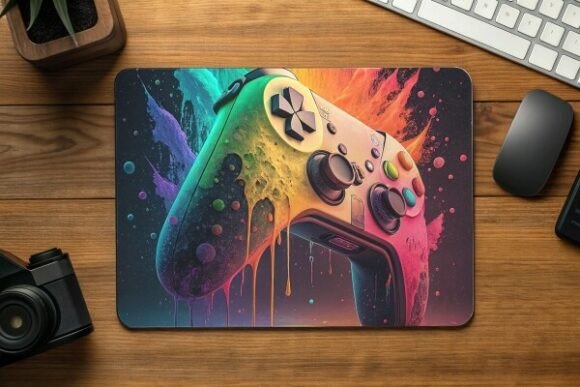
This is not a physical item. It is a single digital download containing one high-resolution PNG file sized at 9.5 by 8.1 inches. The artwork centers on gaming controller imagery, designed to appeal to an audience that includes PC gamers, console players, eSports followers, and streamers who care about desk aesthetics. The transparent background means the design integrates cleanly onto various substrate colors without awkward bounding boxes or white edges interrupting the composition. For anyone who has struggled with clipping paths or manual background removal, this feature alone saves measurable time.
What the File Contains and How It Is Built
Let's start with the concrete details because they determine whether the file fits into a production pipeline or creates friction downstream. The Gaming Controller Mouse Pad Sublimation download includes one PNG file. That simplicity is intentional — you are not sorting through multiple format variations, layered source files, or bundled assets you did not ask for. For a single-product workflow, this keeps things straightforward.
The PNG format supports lossless compression, meaning the crisp edges and vibrant color gradients present in the controller artwork remain intact through transfers and resizing. At 300 DPI, the file holds enough density to produce clean prints on mouse pad blanks without visible pixelation under normal viewing conditions. The 9.5 by 8.1 inch dimensions align with a standard rectangular mouse pad proportion — not oversized desk mats, but the conventional pad size that many sublimation blanks are manufactured to accommodate.
Transparency matters more than some newcomers realize. When you place this design onto a mouse pad template in your printing software, the background of the file does not compete with the substrate color. A black mouse pad shows the controller artwork seamlessly against the dark surface. The same file on a light gray or white pad avoids the jarring rectangular outline that plagues JPEG-based designs. This expands the range of blank colors you can confidently use without design edits.
Where Sublimation Mouse Pad Designs Fit in a Creator's Workflow
Sublimation printing on polyester-coated mouse pads involves heat-transferring dye into the surface layer of the material. Unlike screen printing or vinyl application, sublimation embeds the artwork into the pad itself — it will not crack, peel, or fade at anywhere near the rate of surface-level decoration. For creators selling physical products, that durability translates into fewer customer complaints and returns related to graphic degradation.
A design like the Gaming Controller Mouse Pad Sublimation PNG slots into this workflow at the point where the artwork meets the blank. You press it onto a compatible mouse pad using a heat press, following standard time and temperature parameters for polyester substrates. Because the file is print-ready at the correct dimensions, there is less need for scaling calculations that can introduce distortion or unintended cropping. The file size corresponds closely enough to common mouse pad blanks that most users can import and print with minimal adjustments.
For those operating small-batch or print-on-demand models, the efficiency gain is notable. You are not commissioning custom artwork for each customer, nor are you spending hours tweaking alignment. Download the file, load it into your design software, position it once, and replicate across as many units as your order volume requires. This repeatability, combined with consistent output quality, makes the asset appealing to sellers who value predictability in their production chain.
Evaluating Print Quality and Visual Effectiveness
What separates a mediocre sublimation design from one that produces professional-looking results often comes down to color integrity and edge clarity. The gaming controller artwork in this file uses vibrant, contrasting hues that hold up well under heat transfer conditions. Colors that appear punchy on screen generally translate with similar intensity onto polyester-coated surfaces, provided your press settings and paper quality are dialed in correctly.
The controller imagery itself strikes a balance between recognizable gaming iconography and stylized presentation. It reads clearly as gaming-related without relying on copyrighted character designs or trademarked symbols that could create licensing headaches for commercial sellers. The composition tends to sit well within the usable area of a standard mouse pad, leaving natural negative space where the mouse actually moves. This is a practical consideration — a design that crowds the entire pad surface might look busy in product photos and potentially interfere with optical mouse tracking, even if sublimation does not physically affect sensor performance.
At 300 DPI, the resolution provides adequate sharpness for a product viewed at arm's length on a desk. Close inspection under magnification would reveal the normal limitations of raster artwork, but in practical use — photographed for listings, displayed on stream, or sitting under a user's hand — the detail level satisfies expectations. The transparent edges remain clean after transfer, assuming you use appropriate pressure and temperature. Bleeding beyond the intended design boundary tends to result from press technique rather than file construction.
Practical Applications Beyond the Obvious Mouse Pad
While the file is dimensioned and marketed for mouse pad production, the Gaming Controller Mouse Pad Sublimation design carries flexibility that observant creators will notice. The 9.5 by 8.1 inch size and transparent PNG format mean it can slip into other sublimation contexts without much friction. Ceramic tiles, small fabric panels, tote bag accent areas, and even certain phone case inserts can accommodate a design of this scale. The controller theme retains its connection to gaming culture regardless of the final product surface.
Streamers building cohesive brand environments might use the same design across multiple touchpoints — a matching mouse pad, a small wall art piece, or a custom coaster set for the streaming desk. Because the file remains consistent, the visual language stays coherent without additional design labor. Content creators who sell branded merchandise to their communities can offer a gaming-themed desk accessory without navigating custom illustration costs or lengthy revision cycles with freelance designers.
Gift makers operating on platforms like Etsy or at local markets may find the design slots neatly into their existing product lineup. A gaming controller mouse pad serves as a low-risk gift item — functional, broadly appealing within the gaming demographic, and personalized enough through the sublimation medium to feel intentional rather than generic. Birthday gifts, holiday stocking stuffers, and convention vendor inventory all represent realistic placement opportunities.
Strengths That Matter in Production and Sales
Several characteristics make this digital asset worth a closer look from a business or serious hobbyist perspective. First, the file simplicity reduces complexity. One PNG, one size, one resolution — you are not navigating layers, font dependencies, or embedded color profiles that behave unpredictably across different software environments. This matters when you need to move quickly from download to production.
Second, the transparent background genuinely expands usability. Print-on-demand platforms, sublimation software, and design tools handle PNG transparency reliably in 2025. You can drop this graphic onto mockups, product templates, or listing photos without background cleanup. For sellers who list across multiple marketplaces and need to generate dozens of product images, this time saving compounds.
Third, the controller theme occupies a stable niche. Gaming-related desk accessories maintain consistent demand. New game releases, hardware launches, and streaming trends continually refresh the audience. A design that captures gaming enthusiasm without tying itself to a specific title or franchise ages more gracefully than hyper-specific fan art. It can remain in a product catalog for multiple selling seasons without looking dated after a particular game's popularity cycle ends.
Who Benefits Most from This Type of Asset
The Gaming Controller Mouse Pad Sublimation file aligns best with a few distinct user profiles. Small-scale sublimation business owners who produce custom mouse pads as part of a broader product catalog will recognize the utility immediately. The file fills a specific product SKU without requiring in-house design capability or contract illustrator fees. The unit economics often work favorably — a one-time digital purchase amortized across multiple physical product sales.
Print-on-demand sellers who outsource production to fulfillment partners can also use this file effectively, assuming their provider accepts PNG artwork and offers mouse pad sublimation as a product option. The standard sizing reduces the back-and-forth that sometimes occurs when artwork dimensions do not match the blank specifications. Fewer production delays mean faster fulfillment and better customer experience metrics.
Hobbyists with a home heat press represent another natural audience. Someone who enjoys making personalized gifts for friends in their gaming circle or producing small batches of merchandise for local events will find the ready-made design removes a significant barrier. Not everyone who owns a heat press also has graphic design skills, and bridging that gap with a well-constructed file keeps the creative process accessible.
Streamers and content creators building personal brands round out the potential user base. A custom mouse pad featuring gaming imagery that matches the creator's aesthetic can appear in every stream layout, subtly reinforcing brand identity. The design provides a visual anchor on the desk without demanding the creator develop artwork from scratch or navigate complex licensing arrangements.
Realistic Limitations and Considerations
No design asset serves every purpose, and acknowledging limitations helps set appropriate expectations. This file is not editable in any meaningful sense — you receive a flat PNG, not a vector source file or layered PSD. Resizing significantly beyond the native 9.5 by 8.1 inch dimensions will introduce interpolation artifacts. Scaling down moderately presents fewer problems, but pushing the design onto a full desk mat spanning 30 inches or more would stretch the raster artwork beyond its intended range.
The file works specifically for sublimation. Direct-to-garment printing, screen printing, embroidery digitizing, or laser engraving would require different file types or entirely different artwork preparation. Users who operate across multiple decoration methods should confirm their production path before purchasing. The design is optimized for one process, and attempting to force it into incompatible workflows generates predictably poor results.
Color accuracy between screen preview and final pressed output varies based on printer profiles, ink quality, paper type, substrate coating, and press conditions. The file provides a solid starting point, but achieving perfectly matched colors still requires the user to understand their own equipment calibration. This is not a file flaw — it is an inherent reality of sublimation production that affects every digital design regardless of source.
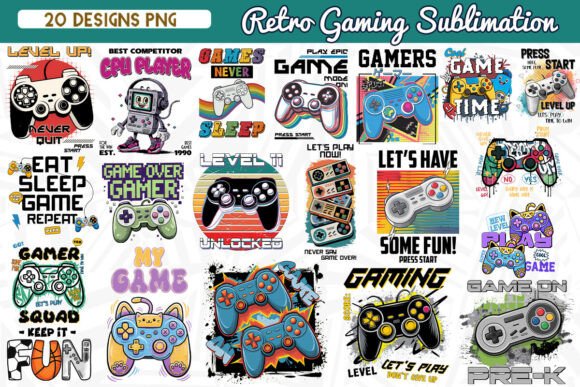
The controller design aesthetic, while broadly appealing, may not suit every gaming subculture equally. Competitive FPS players, retro gaming enthusiasts, and casual mobile gamers have different visual preferences. A single design cannot represent all of these audiences with equal effectiveness. Sellers targeting niche communities within gaming may want to evaluate whether the specific controller style resonates with their customer base before committing to inventory.
Making an Informed Decision for Your Projects
Evaluating the Gaming Controller Mouse Pad Sublimation asset comes down to assessing your production goals against what the file actually offers. If you regularly produce sublimated mouse pads and want a gaming-themed option that arrives print-ready with transparent background and correct sizing, the practical value is straightforward. The file does the job it describes without unnecessary complications or hidden requirements.
If you need extensive customization capability, plan to scale the artwork dramatically, or work primarily in vector-based workflows, this PNG may not align with your technical needs. Acknowledging that upfront prevents the frustration of purchasing an asset that cannot perform the tasks you actually require. Matching the file to the right workflow — standard mouse pad sublimation, occasional cross-product use within the size constraints, and straightforward production settings — produces the most satisfying outcomes.
For the growing number of creators who occupy the space between casual hobby and professional production, files like this represent functional building blocks. They allow you to expand your product range, test new categories, and serve customer interests without expanding your design capabilities or outsourcing artwork at a per-project cost. The file format, resolution, and transparency characteristics all point toward someone who understands production requirements designing for others who share those requirements — and that alignment tends to show in the final pressed product sitting on a desk.